MyAvocado Games
A mobile-first gaming portal for markets where an app install is friction and a monthly plan is a commitment. Browser games, gated behind flexible subscriptions, paid for with airtime or Paystack — designed to move a user from landing to gameplay in as few steps as possible.
Overview
MyAvocado Games is a mobile-first gaming web portal that lets users play a wide range of browser-based games, embedded through i-frames. Access is gated behind an active subscription — daily, weekly, or monthly — with payments supported via airtime and Paystack.
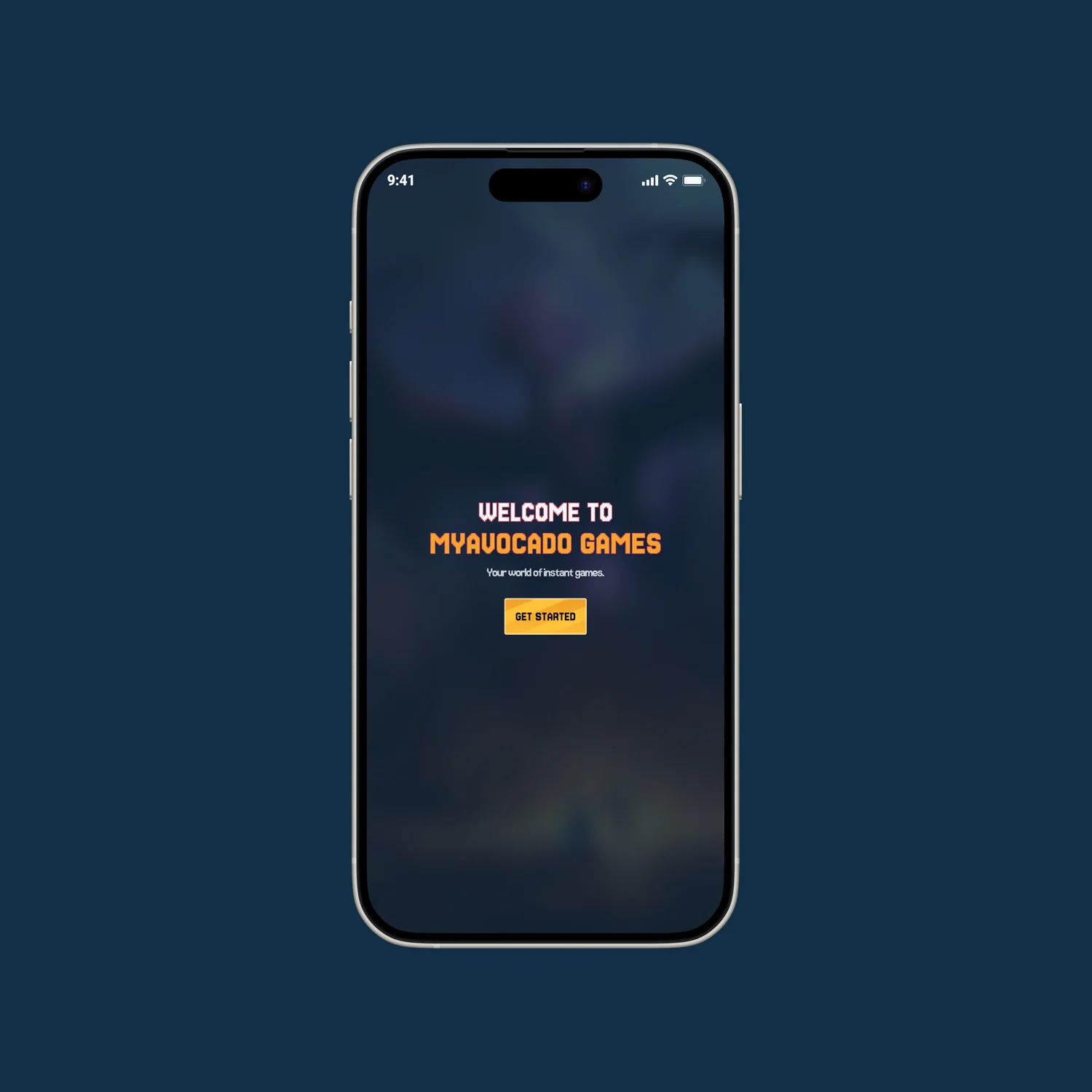
The product leans on a fast, immersive feel with minimal friction: a branded splash screen, simple onboarding, and a dark blue–to–teal theme that reads premium but stays playful.
The problem
In many mobile-first markets, people want quick entertainment without installing an app, managing storage, or committing to a long subscription. But most browser-based gaming platforms get in their own way:
- Poor mobile optimisation
- Fragmented onboarding
- Unclear monetisation flows
- Little immersion or brand identity
The opportunity was a lightweight but engaging platform that balances ease of access with sustainable monetisation — fun for the user, and viable for the business.
Five objectives, one tension to resolve
Every goal pulls toward either access or revenue. The design job was to hold both without letting the paywall smother the play.
- Provide fast, accessible browser-based gaming on mobile
- Monetise through flexible, auto-renewing subscription plans
- Reduce friction between game discovery and gameplay
- Create an immersive, recognisable brand experience
- Support payment options suited to local markets
Who it's for
Primary
- Young adults and teens, roughly 16–35
- Mobile-first users who regularly consume games and entertainment
Secondary
- Casual gamers after quick, no-install entertainment
- Users who prefer short-term, flexible subscriptions
Get to gameplay, then charge — in that order
The paywall sits at the moment of intent, not before it. A user reaches a game they want before they're asked to pay, which is what makes the ask feel earned rather than imposed.
New user
- Lands on the site → branded splash screen
- Redirected to the game catalog
- Selects a game → subscription prompt appears
- Chooses a plan — daily, weekly, or monthly
- Pays via airtime or Paystack
- Signs up with basic details
- Gains access and starts playing immediately
Returning user
- Lands on the site → splash screen
- Logs in via modal
- Active subscription → direct game access
- Expired → prompted to renew
Both flows are built to minimise decision fatigue and get someone into a game as quickly as possible.
Four surfaces carry the product
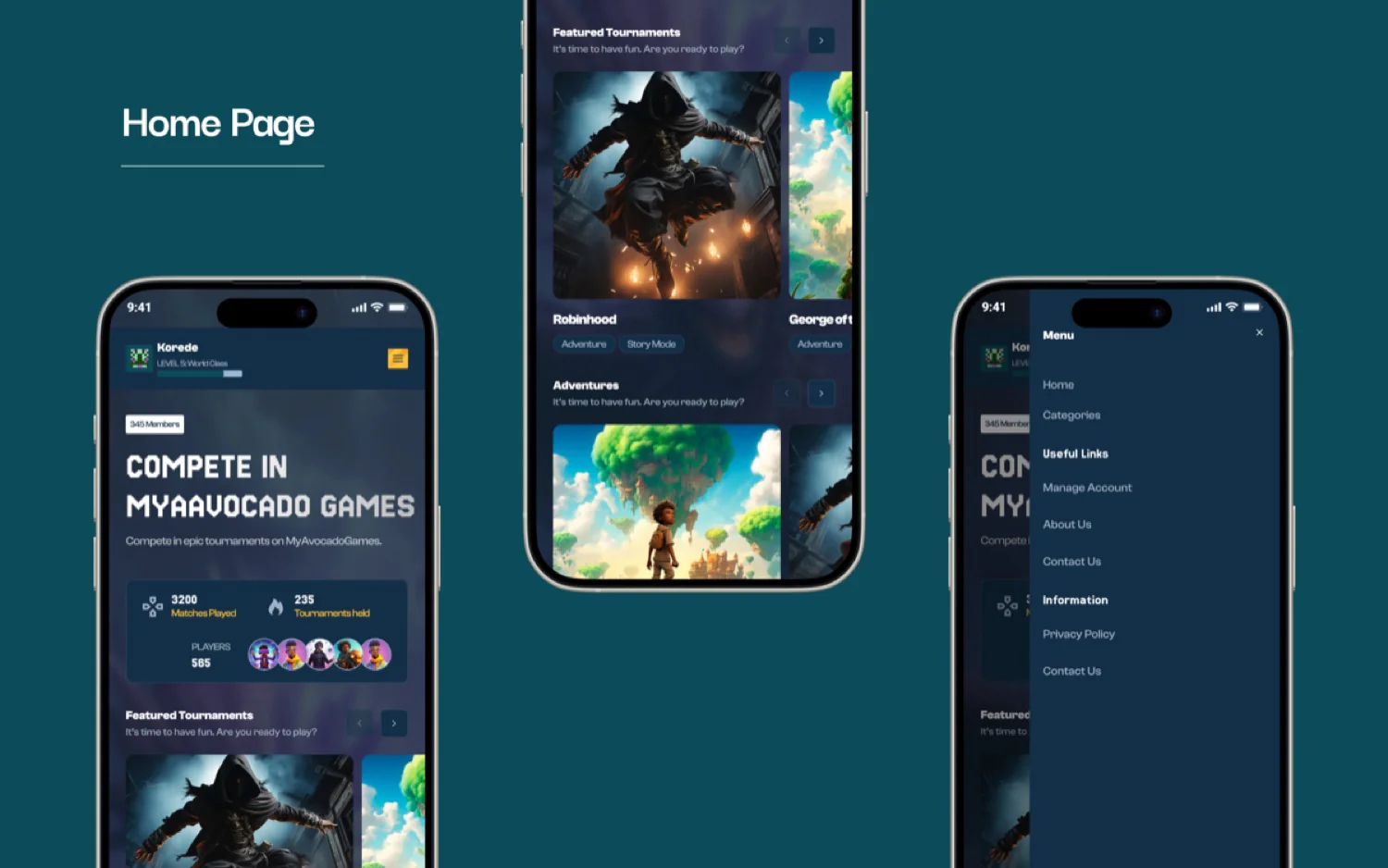
Home hub
- Purpose — the main entry point, surfacing featured tournaments, popular games, and key actions at a glance
- Featured tournaments with highlights and countdowns
- Curated sections for popular and recommended games
- Announcements and platform updates
- Hamburger menu linking to key actions and pages
- Design intent — balance discovery and speed, so users find games, join tournaments, and reach core actions without clutter
Game catalog
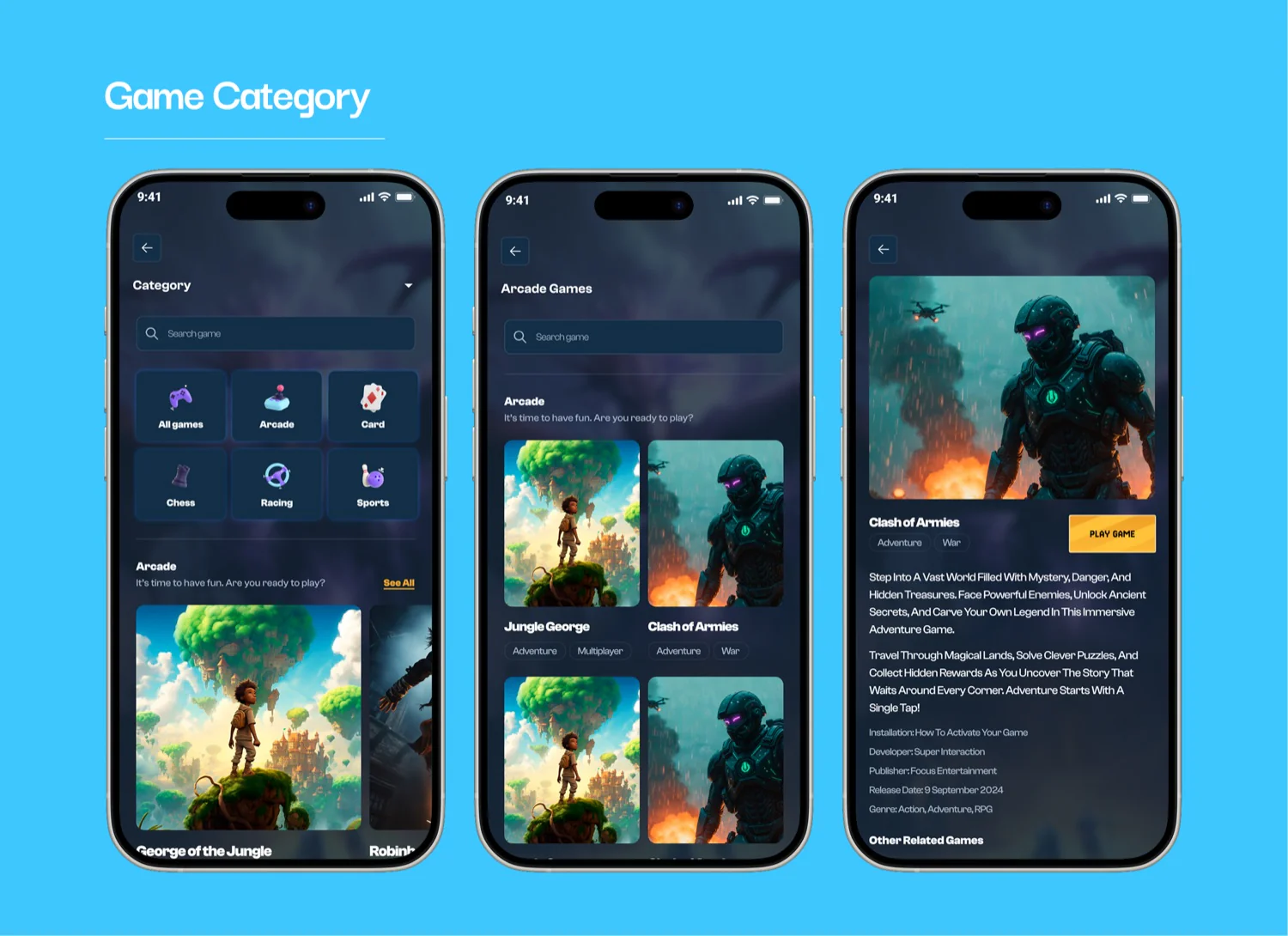
- Purpose — let users discover games quickly
- Grid-based layout optimised for mobile
- Game thumbnails for fast scanning
- Category-based filtering
- Design intent — visual clarity and fast discovery over complex navigation
Subscription system
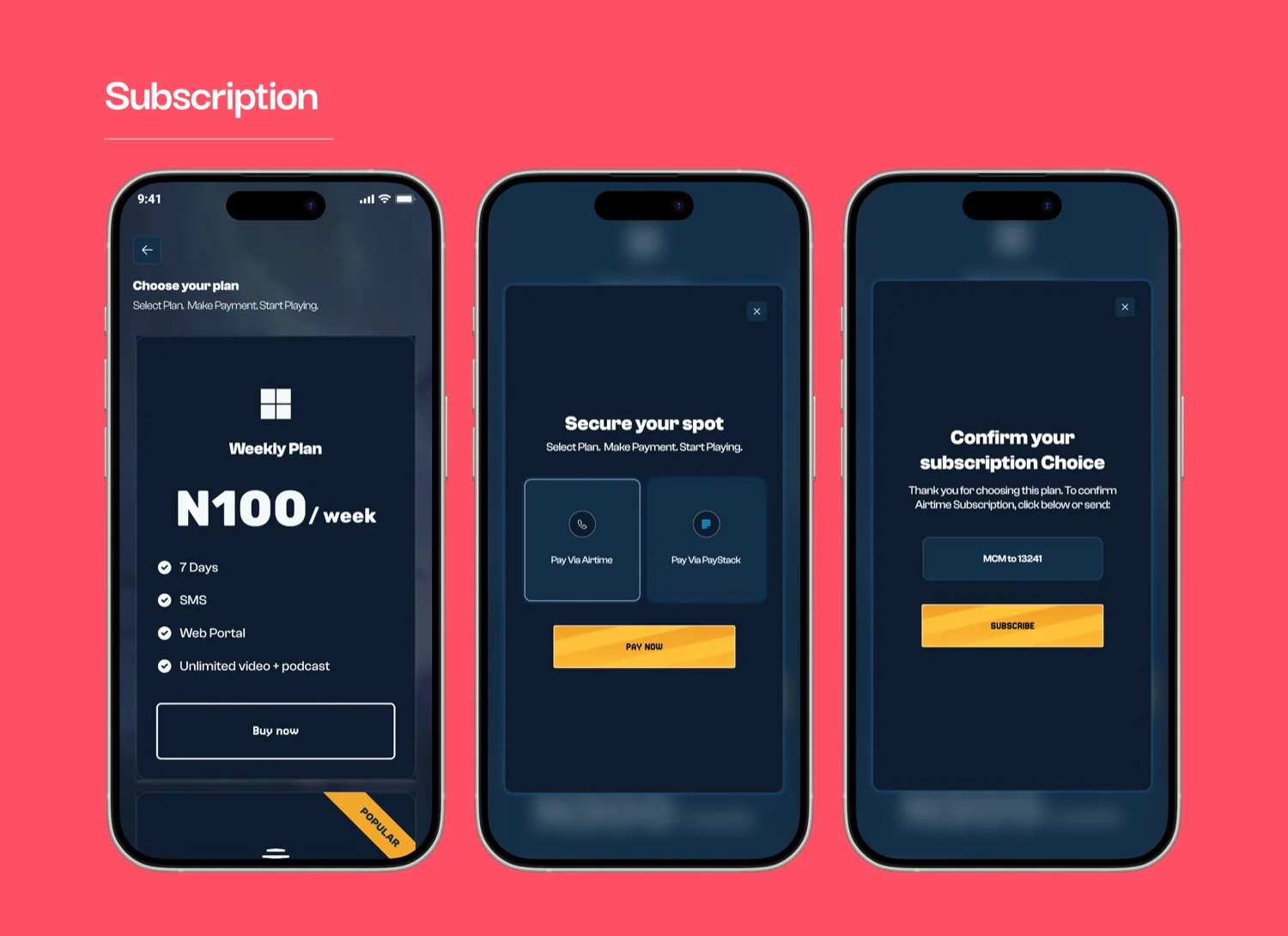
- Purpose — monetise access flexibly, without a heavy commitment
- Daily, weekly, and monthly plans
- Auto-renewal on by default
- Clear plan comparison
- Design intent — transparent pricing and low friction at the point of conversion
Payment modal
- Purpose — support convenient payment for a broad user base
- Airtime payments — the option that actually matters in the target market, where card penetration is low
- Paystack integration for cards and transfers
- Design intent — localised payment options raise accessibility and conversion, so the checkout was built around them rather than bolting them on
Accessibility and monetisation, held together
MyAvocado Games shows how a mobile-first, subscription-based product can balance accessibility, monetisation, and immersive design. The project demonstrates designing for fast, real-world mobile use; structuring clear monetisation and access-control flows; building UI systems aligned with brand goals; and translating business requirements into intuitive experiences.
It reflects my approach to entertainment platforms that are fun for users and sustainable for the business — the two rarely pull in the same direction, and the whole design is an argument for how they can.